


Flooring Tips
Carpet Mill's Incredibly Useful Guide to Buying New Flooring
Heavy Duty or Extra Heavy Duty?
You might be surprised to know there’s a pretty big difference between Heavy Duty Carpet and Extra Heavy Duty Carpet. They’re industry-wide definitions, and they must meet certain specifications to be able to be named as such.
Heavy Duty is actually designed for reasonably low traffic flows and is used a lot in the spec home market.
Extra Heavy Duty is recommended for any area with high traffic flow or in a home where you plan to stay and live. Medium and Light Duty won’t really cut the mustard when it comes to long-term use.
Which Fibre and why?
Solution-dyed polyesters, Polyprops, and other synthetics are cheaper and less durable yarns. Unfortunately, this is not always reflected in the retail price, as a lot of consumers assume solution-dyed synthetics are all the same. This is often not clearly explained by retailers.
Blended products, such as 50/50 blends, are a way to make a product cheaper, not necessarily better. Regardless of whether you choose 100% Wool or 100% synthetic, they’re a better choice than a 50/50 blend.

Shading and Tracking.
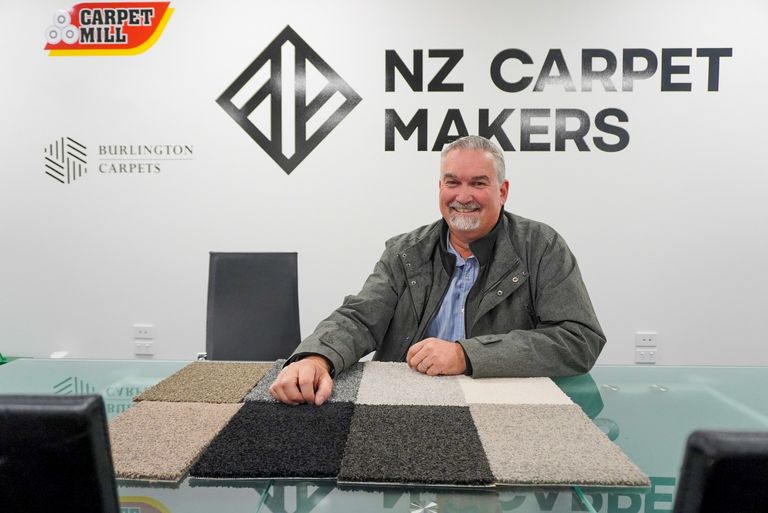
is is a big issue for a lot of people, but the fact is, all cut-pile carpet will show tracking and shading to some extent. You might notice vacuum tracks or where people have walked.
But if you select your product wisely, there are ways to decrease the appearance of shading and tracking greatly
Avoid carpets with really long loose piles, because the longer the carpet, the more likely it is to track. Short dense piles minimise tracking. Run your hands through the pile of your carpet samples - the more the pile moves under your hands, the more likely you are to see where you walk and where you do not. And make sure if you are looking at longer, plusher piles for the more luxurious feel, that your carpet is of dense construction and the fibres are packed tightly together.
Tracking and shading are not manufacturing faults - shading is actually considered to be a feature of the carpet. If you want to avoid it completely, then you should go for a loop pile carpet.
The Importance of Underlay.
Choosing good underlay will make a huge difference to the feel of your new carpet.
The overall thickness of the underlay does not indicate quality. Anything between 10mm and 12mm is recommended for luxury and comfort. Not too thin and not too thick.
But most critically, it’s the weight or density of the underlay that indicates its quality. 90kg is a good average grade, and 110-120kg (more foam than air) is a good-quality underlay. 130 kg is alright, but you don’t want to go too firm, or you'll lose the soft, luxurious feel that the underlay is designed for in the first place.
Do you know what you are paying for?
Always ask for an itemised quote. In doing so, you find out exactly what you have been quoted for. Sounds obvious, but a lot of people don’t ask for them and end up with costs they hadn’t bargained for.
For example, if removing the old carpet and furniture moving is included, you know exactly what you would save if you decided to do this part yourself.


Planning, Joining, Shape Cutting and Installation.
Carpet Mill can provide you with a copy of your join plan prior to having your carpet installed so you can see exactly where your joins are going to be.
They then custom-cut your carpet with a robotic cutting machine, which means your carpet arrives on site pre-cut to the shape of your floor, ready to lay!
The main advantages of this are: Much faster installation process, a lot less wastage and no large rolls are being cut in your driveway, which can be a big issue when it’s wet outside.
Warranties.
Carpet Mill keeps it simple with a straightforward, one-page warranty, no lengthy fine print, no confusing clauses. As manufacturers behind the products, we have a genuine understanding of how our carpets perform over time, which means we can offer realistic warranty timeframes without the need for pages of terms and conditions. You can view the full warranty details on their website.
Hardflooring
What we do at Carpet Mill:
There's a hard flooring solution for every home; it really comes down to the space you're covering and how it's going to be used. A small toilet might be perfectly suited to a cost-effective vinyl sheet, while a busy kitchen or bathroom calls for something waterproof and scratch-resistant, like an SPC floating floor.
Good floor prep is the foundation of a great result; skip it and even the best product won't perform the way it should.
We assess what's needed during the site measure and itemise floor prep separately on your quote, so you know exactly what you're paying for and why.
You might wonder about laying over existing vinyl; it seems like the easier, more affordable option, but it's not good practice. It can void your warranty and end up costing you more down the track. So it's not something we do.
Waranties
We keep it simple. Our warranties are straightforward and one page: no lengthy fine print, no confusing clauses. You can find them on our website, or just ask your salesperson to send one through at any point during the process.
Carpet Buying Checklist.
- Heavy Duty? Extra Heavy Duty? Have you selected the right carpet for the job?
- Wool? Solution Dyed? Know what fibre you are buying.
- Shading and tracking. Cut Pile or Loop Pile. Have you selected what's right for you?
- Underlay. Check the weight and density to ensure you are getting quality.
- Get an itemised quote so you can see everything you're paying for.
- Ask for a plan that shows you where the joins are.
- Is the installation guaranteed for the life of the carpet? It is with Carpet Mill.
- Check your warranty. Some are full of exclusions.